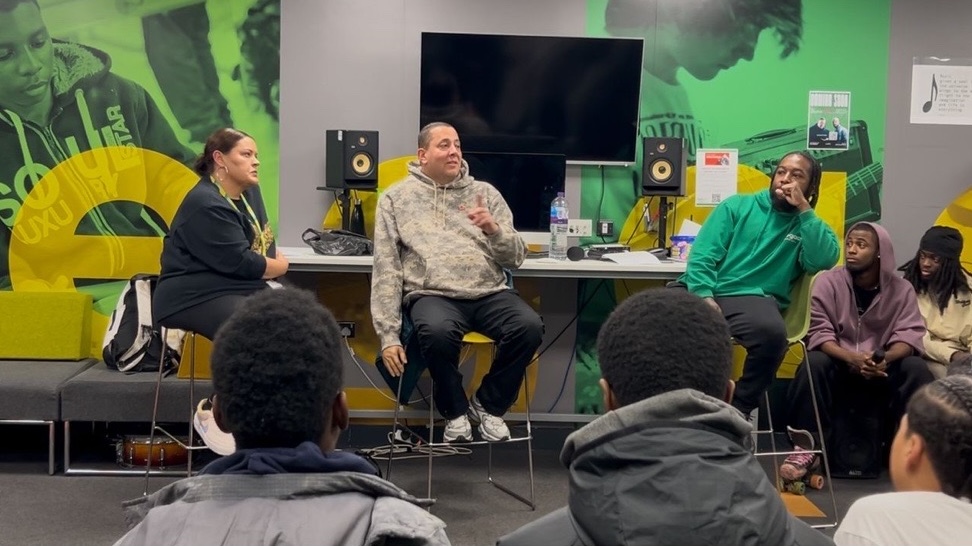
last week co-hosted an industry roundtable.
They brought together technology manufacturers, accessibility experts, record labels, radio professionals and dementia sector leaders to tackle critical barriers preventing older adults and people living with dementia from accessing music.
The Music Made Easy Roundtable, held at children’s audio platform Yoto’s HQ in London, represents the first in a series of industry events run by Music for Dementia to support their Music Made Easy campaign, launched in September 2025 to challenge accessibility gaps across the music and technology sector.
The event convened more than 19 senior representatives including Universal Music Group, BPI, BBC, Music for Dementia partner Yoto and leading independent advocates – alongside research experts from the University of Sheffield's BRIDGES for Dementia Network, which focuses on designing and applying technology to empower people with dementia.
Discussions centred on device accessibility, platform design, the need to co-design alongside lived experience advisors and the commercial and cultural case for prioritising older audiences.
Participants explored critical questions: How can we ensure people living with dementia are integrated into the design process from day one? How can we change licensing restrictions to support easy access to music? How can we better communicate existing tools and support? Most importantly: how can we work together to drive progress?
The roundtable discussion revealed that there are pockets of real progress being made by individual organisations and sectors, yet everyone agreed that it would take industry collaboration to create real progress. To this end Music for Dementia and The University of Sheffield will be spearheading a new taskforce to improve music accessibility for people living with dementia.
Karim Fanous, Director, Innovation and New Digital Business, Global Digital Strategy at Universal Music Group said: “Music for wellness and health is a vital area in our search for startups and support of entrepreneurial innovation that might add value to music and society.
"Music for Dementia and the University of Sheffield are initiating an important multi-stakeholder project which we will be honoured to support alongside UMG Health and Wellness.”
Emily Ingram, General Manager, Sollos, UMG Health and Wellness said: “Music can be an enjoyable and effective way to improve lives, whether it’s for people living with dementia or struggling with everyday stress and low mood. Accessibility matters, and UMG’s Sound Therapy project on Apple Music, alongside our in-house Sollos research programme, are key components of our ongoing efforts to make these benefits more widely available.
"Through Sollos and our health and wellness partners, we are starting to see what is possible when music, science and technology come together. Music for Dementia is driving vital progress and we are proud to support it.”
Aleksandra Gojkovic, Senior Design Researcher, User Experience and Design at BBC said: “A big thank you to Music for Dementia and all contributors for sharing their insights, research and work and for facilitating an open and productive conversation about such an important issue of making music more accessible. At the BBC, universality is at the heart of what we do. Ensuring that everyone can experience and enjoy the power of music is an important part of that mission.”
Hailey Willington, BPI Head of Diversity, Equity and Inclusion, said: “Music for Dementia's roundtable brought together the music ecosystem, from record labels to people with lived experience, to explore the barriers preventing people living with dementia from accessing the music that matters to them. Music should be accessible to all, and by working together, we can redefine what accessible music technology looks like and ensure that it can serve everyone, not just digital natives."
Howard Gordon, Chair of Meeting Centres England, Co-Chair of Deepness Dementia Media Ltd, and advisor from BRIDGES for Dementia Network, said: "In the words of Ronald Coleman ‘true co-production starts with a plain piece of paper.’ People living with dementia should drive co-production of new product designs from the start. They know what's needed better than anyone. They are rights holders and human beings, and shouldn’t be defined by their diagnosis."
Recent Music for Dementia research with 1,000 family carers of people living with dementia reveals the scale of the problem: only 3 in 10 older family carers are able to stream music with their loved one. Age UK research paints a similar picture – they found that 6 in 10 internet users aged 65 or over never use the internet to stream music or videos.
"The generation that created popular music is now increasingly locked out of it," says Amy Shackleton, Programme Lead, Music for Dementia. "This important roundtable event challenged attendees with a fundamental question: what is needed to make music more accessible for older people, especially those living with dementia that need it the most? The answer is clear – we need cross-sector collaboration, better design practices and a commitment to co-production with users and carers.
“I’m really encouraged by our first Music Made Easy industry roundtable event. There was real energy and passion from attendees to improve access to music for older people. We went in wanting a commitment from people to join a new taskforce, and we are really pleased that so many want to be part of this journey.”
The roundtable included findings from Music for Dementia’s Yoto Player trial, which adapted the popular children’s audio player for people living with dementia. It found 92% of participating families would recommend screen-free music devices for older people.
Dr Jennifer MacRitchie also presented the co-designed devices and research findings from the Music, Dementia, Technology project at the University of Sheffield. Here, people living with dementia were involved in developing devices for playback of familiar music, devices for creating new music, and for improvising along with a musical jamming partner, reflecting the diversity and breadth of technology possibilities.
In the UK there are 940,000 people living with dementia, and this figure is projected to rise to 1.5million by 2040. Research shows music can alleviate agitation and distress, support identity and self-hood, bring back memories and even abilities thought lost, create moments of connection and joy and overcome isolation.
https://www.musicfordementia.org.uk/music-made-easy
To learn more about the amazing Yoto players please visit https://thatschristmas.blogspot.com/2025/09/the-yoto-player-and-yoto-mini-world-of.html