Translate

Showing posts with label Slough. Show all posts

Friday, 20 February 2026

John Betjeman – Slough (1937) A Critical Analysis

Context and Overview

Slough was written in 1937, at a time when Britain was experiencing rapid industrial expansion in certain areas, particularly along new arterial roads and trading estates. 

The Slough Trading Estate was one of the largest industrial estates in Europe at the time, and had become a symbol of modern commercial development. 

Betjeman’s poem is a fierce satirical attack on this emerging industrial landscape and what he saw as the cultural and spiritual emptiness it represented.

The poem opens with the shocking invocation:

Come friendly bombs and fall on Slough!”

This startling first line immediately establishes tone and technique: hyperbolic satire. The speaker calls for destruction not out of literal malice, but to express moral outrage at what Slough symbolises — soulless modernity, speculative building, and the erosion of England’s pastoral and architectural heritage.

Satire and Hyperbole

Betjeman’s tone is exaggerated and ironic throughout. His call for bombs, written only two years before the outbreak of the Second World War, now carries a dark historical irony. 

Yet within the poem’s 1937 context, it functions as a grotesque exaggeration designed to provoke and shock.

The town is depicted as:

Spiritually barren

Architecturally ugly

Morally empty

Phrases such as “tinned fruit, tinned meat, tinned milk” create a rhythm of artificiality and uniformity. The repetition of “tinned” suggests not just preserved food but preserved, mechanised lives — sealed, standardised and devoid of freshness. Industrial capitalism becomes something embalmed and lifeless.

Industrial Modernity vs. Rural England

A central tension in Slough is the clash between industrial progress and the older vision of England that Betjeman cherished. He was known for his affection for Victorian architecture and rural landscapes. In this poem, modern business culture appears sterile and spiritually corrosive:

“And get that man with double chin

Who’ll always cheat and always win…”

Here Betjeman satirises the figure of the profit-driven businessman — physically unappealing, morally suspect, and emblematic of unregulated capitalism.

The poem suggests that economic “progress” has replaced beauty, craftsmanship and community with speculative building and profit margins. Slough becomes shorthand for a new England dominated by concrete, office blocks and commuter culture.

Rhythm and Structure

The poem uses a jaunty, almost nursery-rhyme rhythm. This lightness contrasts sharply with the violence of its opening line and the severity of its criticism. The regular rhyme scheme and bouncy cadence intensify the satire; the poem sounds cheerful while expressing destructive wishes.

This contrast creates tension:

Cheerful rhythm

Bitter content

The form mirrors the hypocrisy Betjeman perceives — pleasant surfaces masking ugliness beneath.

Moral and Spiritual Emptiness

One of the poem’s most powerful themes is spiritual decay. Betjeman portrays Slough as lacking imagination, art and emotional depth:

“There isn’t grass to graze a cow.”

This line functions symbolically. The absence of grass implies not merely urbanisation but the eradication of organic life. Nature has been replaced by asphalt and warehouses.

The town is portrayed as mechanised, joyless and culturally thin — a place of mass-produced existence rather than individual identity.

Historical Irony

After the Blitz began in 1940, Betjeman reportedly expressed regret over the poem’s opening line. The reality of bombs falling on English towns made the satire uncomfortably literal. 

This historical development complicates modern readings of the poem. What was once exaggerated rhetoric gained tragic resonance.

Today, the poem may feel less like a call for destruction and more like a cultural lament — a warning about unthinking development and the loss of heritage.

Is the Poem Fair?

A critical reading must ask whether Betjeman’s portrayal is exaggerated and elitist. Slough provided employment during the interwar depression and represented economic opportunity for many. From another perspective, it symbolised modern resilience rather than decay.

Thus, the poem can be read in two ways:

A sharp and prophetic critique of soulless industrialisation.

A nostalgic, perhaps reactionary rejection of social change.

Betjeman’s conservatism informs the poem’s perspective. His love of architectural tradition and Anglican England shapes his disdain for commercial modernity.

Conclusion

Slough remains one of Betjeman’s most provocative poems. Its biting satire, exaggerated invective and rhythmic irony create a powerful critique of 1930s industrial expansion. Yet it is also a poem rooted in anxiety — about modernity, capitalism, and the erosion of a particular vision of England.

Rather than simply attacking a town, Betjeman attacks a mindset: one that prioritises profit over beauty and efficiency over soul. The poem endures because its questions about development, heritage and cultural identity remain relevant today.


Incidentally Slough is working hard to become UK Town of Culture for 2028 

Viva Slough! Slough announces bid for UK Town of Culture 2028

Poet John Betjeman had some rather harsh words for Slough:
Come friendly bombs and fall on Slough!
It isn't fit for humans now,
There isn't grass to graze a cow.
Swarm over, Death!

(In my next blogpost I will provide a critical perspective on the poem by John Betjaman and why he was actually pro-Slough, rather than against it.)

I think that he would be pleased and impressed with the news that Slough has announced its intention to bid for UK Town of Culture 2028, launching a bold campaign to reshape how the town is seen nationally. 

The bid aims to dismantle decades of unfair reputations and tired “The Office” stereotypes, replacing them with a confident, future-facing story of creativity, connectivity and cultural energy.

The bid sets out to move beyond long-standing perceptions and present Slough as a place defined by its people and its role in the UK’s digital and economic infrastructure. Organisers emphasise that the focus will not be on a single year of events, but on using culture to support skills development, community participation and pride in place.

Slough is one of the youngest and most ethnically diverse towns in the UK and sits at the heart of the Thames Valley economy. 

It's also home to major data centres and digital infrastructure that support large parts of the UK’s internet traffic. 

Located next to Heathrow Airport, the town has long been shaped by migration, movement and global connections.

A new Town of Culture Steering Group is being formed to oversee the bid, bringing together representatives from business, education, the voluntary sector, culture and youth organisations. The group will be chaired by Rob Deeks MBE, chief executive of Together As One, who was recently awarded an MBE for his services to young people and the community in Slough, recognising his long-standing work supporting and empowering young people across the town.

Rob Deeks told That's Books and More: “Our bid for Town of Culture will be rooted in Slough’s everyday stories, its resilience, and its creative ambitions. 

"Culture here is expressed through the arts and events, but also through how people come together, share identity, and shape the place they live. It is about making space for everyone to participate, belong, and thrive.”

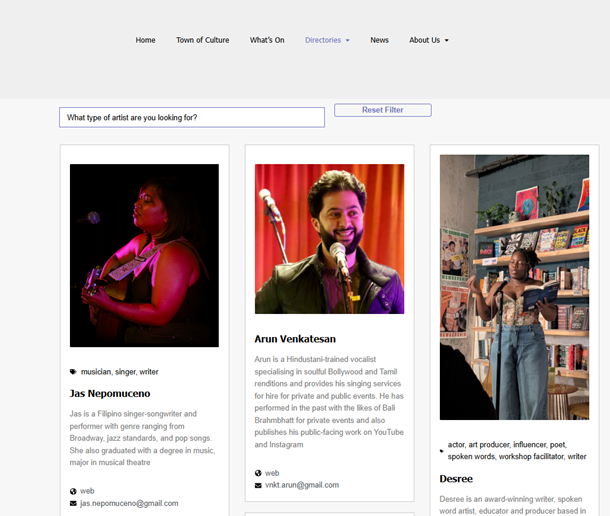
Slough’s bid is not built on aspiration alone. It is rooted in a vibrant and evolving cultural landscape. It has internationally connected music and dance communities, contemporary public art transforming everyday spaces, and is at the heart of Britain's Film and Television Industry with a pool of creative talent. 

Slough is already a place where culture is lived, not staged. Culture is expressed through faith traditions, community choirs, spoken word, visual arts, grassroots theatre and digital creativity.

Slough is already a place where culture is lived, not staged.

Slough’s heritage is industrial, migratory and entrepreneurial, a story of reinvention, resilience and contribution to the national economy, and the 2028 bid will celebrate this living, working, creating town in all its richness.

The bid will be managed by Vineet Vijh, Director of community organisation Viva Slough, who has been leading wider efforts to promote culture, wellbeing and skills development across the town.

Vineet Vijh told us: “Slough doesn’t need reinvention, but it does need recognition. We are digitally connected, globally diverse and full of creative energy. Town of Culture gives us the chance to turn those strengths into pride, opportunity and long-term change.”

Get Involved

The bid team is launching a month of intensive community consultation to ensure the final proposal is truly “built by Slough, for Slough”. This will include:

Town Hall Meetings – open forums for residents to share their ‘Untold Slough’ stories

Youth Summits – sessions in schools, colleges and youth centres throughout February and March

Public Webinar (3 March) – an open invitation for anyone interested in, or curious about, the bid

Small Business Briefing (24 February) – delivered in collaboration with the Federation of Small Businesses, supporting entrepreneurs and developers to align their projects with the 2028 vision

Developer Forum (23 February) – discussions with property developers interested in investment and development in Slough

Early responses from residents, local arts organisations and businesses have been positive.

Toby Kress, Chief Executive of Plus X Innovation, said the bid reflected wider changes in how places like Slough are viewed.

“Slough is already a powerhouse of innovation and talent. Town of Culture 2028 is an opportunity to connect that innovation to creativity and community, and to put Slough firmly on the national and international map.”

Gozan John, a 17-year-old A-level student at St Bernards school, said she welcomed the opportunity for young people to be directly involved in shaping the bid.

“So often decisions about places are made without young people being properly involved. What’s exciting about this bid is that our voices are being taken seriously from the start. Slough is full of young talent and ideas, and this feels like a real chance to for them to help shape the town we want to grow up in.”

Seema Kamboj, Director of arts organisation Apna Virsa (Our Heritage), which has been running for over 17 years and works with more than 5,000 Slough residents, said:

“Slough has always been rich in talent, ambition and diversity. What’s been missing is the platform to tell that story on our own terms. This bid is about unlocking the creativity of our different communities, young and old, and showing the country what modern Britain really looks like.”

The bid has the full support of Slough Borough Council, local MP Tan Dhesi, and Council Leader Dexter Smith, all of whom will actively support the campaign.

The UK Town of Culture competition is run by the Department for Culture, Media and Sport. The winning town will receive £3 million in funding and hold the title for one year, though organisers stress that bids are assessed on long-term impact rather than the scale of individual events.

Slough is competing in the large town category. The deadline for submitting an Expression of Interest is 31 March 2026.

https://vivaslough.org